
An interactive exploration of the physical limits of life on other worlds.
For much of the history of animal life, becoming bigger has been an effective way to survive. Size can deter predators, open access to new sources of food and confer an advantage over competitors. During the Mesozoic, some sauropod dinosaurs reached masses of tens of tonnes.
But suppose the evolutionary arms race had taken place on a planet with twice Earth’s surface gravity. Would the giants of the Mesozoic have been possible? At what point might it pay to become better defended, better coordinated or better at outthinking a rival rather than simply becoming bigger?
This is the first HybridSec Science Lab, an interactive exploration of how the physical properties of a planet might influence the evolutionary opportunities available to its inhabitants. The experiments isolate mechanical relationships; they do not predict alien anatomy or behavior.
A different kind of Earth
Astronomers have discovered a class of planets for which our solar system offers no direct equivalent. Super-Earths are generally more massive than Earth but less massive than Neptune. Some may have rocky surfaces, while others possess substantial gaseous envelopes. The classification does not establish habitability.
Surface gravity depends on both planetary mass and radius. Double a planet’s mass without changing its radius and its surface gravity doubles. Rocky planets, however, generally grow in radius as they gain mass, and their interiors compress.
A 2016 study by Zeng, Sasselov and Jacobsen provides a mass-radius relationship for two-layer rocky planets. Using its mass exponent, normalized to Earth for a fixed Earth-like composition, we can construct a hypothetical family of rocky planets.
Build a rocky planet
Change planetary mass to see how radius, surface gravity and escape speed respond.
Earth-normalized approximation to Zeng et al. (2016): R/R⊕ = (M/M⊕)^(1/3.7), for a fixed Earth-like rocky composition. Surface gravity is proportional to M/R². No atmosphere, rotation or habitability is modeled.
Move the slider toward 4.5 Earth masses. The model planet has approximately 1.5 times Earth’s radius and twice its surface gravity. It is not a claim that such a world is inhabited, but a physically plausible starting point for a thought experiment.
The price of becoming bigger
A predator’s body is both an instrument of survival and a structure that must support its own weight. Double the dimensions of an animal while retaining its shape and density and its mass increases eightfold. The cross-sectional area available to resist compressive loads increases only fourfold.
Divide weight by supporting area and, under these assumptions, structural stress scales with linear body size multiplied by surface gravity. This is an application of the square-cube law.
Real animals do not simply scale up like architectural models. In a 1989 study of mammalian biomechanics, Andrew Biewener showed how larger mammals improve the mechanical advantage of their muscles through more upright limb posture. A 2011 review of sauropod biology describes a combination of inherited traits and anatomical innovations, including long necks, respiratory adaptations and reproductive biology, that helped enable dinosaur gigantism.
Gravity defines part of the mechanical problem. Evolution can change the design.
A human on another world
Take a familiar reference: a six-foot-tall adult human with a mass of 180 pounds (approximately 82 kilograms). In a 2g environment, the same person would experience twice the static weight, although their mass would be unchanged.
Now ask how large a geometrically similar organism could be if it experienced the same static structural stress as the Earth reference. With body proportions, density and tolerable stress held constant, linear dimensions scale inversely with gravity. Mass scales with the cube of that ratio.
Scale a human analogue
Compare a six-foot, 180-pound Earth reference with a geometrically similar organism at equal relative structural stress.
Height = 6 × capacity/gravity; mass = 180 × (capacity/gravity)³. Capacity is an assumed multiplier on tolerable stress, not a measured evolutionary response. Density and proportions remain constant. The results are not predicted adult heights, viable body sizes or estimates of alien anatomy.
At 2g and unchanged structural capacity, the equivalent height is three feet, with a mass of 22.5 pounds (about 10 kilograms). This is not a forecast for human evolution or a maximum safe human height. It answers a narrowly defined mechanical question.
Try doubling the assumed structural capacity at 2g. The model restores the six-foot reference. Real evolutionary compensation could involve posture, skeletal geometry and muscle architecture, each with its own costs. The slider represents a hypothetical multiplier, not a biological recipe.
Circulation matters too. For a given fluid density and vertical distance, hydrostatic pressure differences increase with gravity. Locomotion, respiration, balance and development would all have to function under the changed conditions. The model deliberately does not solve those separate problems.
A different evolutionary arms race
Explore the cost of gigantism
Compare normalized static stress as linear size changes. The colored lines represent four gravitational environments.
Relative stress = gravity × linear size. A reference value of 1× is not a failure threshold. The model excludes motion, fatigue, posture changes and other adaptations.
An animal twice the reference length at Earth’s gravity experiences the same modeled static stress as a reference-sized animal at 2g. Neither result tells us whether the organism will survive.
The ecological implication is more interesting. If increasing size becomes mechanically expensive, other heritable traits might offer greater fitness returns. Venom allows some small predators to overcome larger prey. Camouflage and chemical deterrents can make prey costly to attack. Social insects distribute labor across individuals, while social predators can cooperate to capture animals too large for any one member of a group.
None of these alternatives comes free. Armor adds mass, cooperation requires coordination, and cognitive adaptations demand energy. High gravity could favor compact anatomy or sedentary behavior without favoring either sociality or sophisticated cognition.
Our working hypothesis is therefore comparative: holding other environmental conditions constant, does stronger gravity alter the relative fitness returns of increasing body size versus alternative competitive adaptations? The mechanical premise is well understood. The ecological outcome remains untested.
Where giants might still flourish
The blue whale is larger by mass than any known dinosaur. Water makes an important difference. An organism close to neutral buoyancy does not need to support its full weight against gravity. Its net downward force depends on the difference between its density and that of the surrounding water, its volume and gravity.
On a high-gravity world with oceans, this could produce a greater disparity between aquatic and terrestrial animal sizes than we observe on Earth. But buoyancy does not remove all constraints. Water pressure increases more rapidly with depth in stronger gravity, and marine organisms still have to move, feed, exchange gases and reproduce.
Research published in Science in 2019 found that whale gigantism depends in part on prey abundance and feeding mechanisms. A world with enormous marine organisms and compact land animals is a plausible subject for investigation, not an inevitable outcome.
The intelligence question
Human evolution illustrates how technology can expand an organism’s capabilities without increasing its body size. Tools, cooperation and accumulated knowledge extend our reach. Might a biosphere in which brute strength becomes more costly place a greater premium on some of these capabilities?
This is the most speculative part of the investigation. Evolution has no predetermined trajectory toward intelligence. Nervous tissue has substantial energetic requirements, and many successful organisms have no nervous system at all.
A 2026 theoretical paper on gravity and three-dimensional multicellularity considers gravity as a persistent mechanical boundary condition for biological organization. It offers a complementary perspective at the cellular level, but does not establish the ecological or cognitive effects proposed here.
There is a further distinction. The emergence of technological intelligence and its ability to become spacefaring are separate problems. Return to the first experiment: the modeled surface escape speed rises from approximately 11.2 kilometers per second on Earth to 19.4 on the 4.5-Earth-mass planet. Escape speed is not a rocket’s launch delta-v requirement, but it illustrates the larger gravitational energy barrier per unit mass. Atmospheric conditions, propulsion and staging also matter.
A civilization might develop sophisticated technologies while facing a considerably steeper barrier to leaving its home world.
From speculation to a testable hypothesis
We have only one confirmed living biosphere. We cannot compare the average body sizes of animals across dozens of inhabited worlds. But we can investigate the mechanics and construct experiments.
A computational evolutionary ecology model could vary gravity while holding resources, tissue properties and initial population characteristics constant. Populations could evolve traits such as body size, limb architecture, chemical defenses and cooperation under explicit energetic and reproductive costs. Outcomes could include body-size distributions, extinction rates and the relative success of competing strategies.
A meaningful test would run many independent simulations, vary the assumptions and compare outcomes with a null model in which gravity changes morphology but not competitive strategy. Altered-gravity experiments could complement such work by measuring development, locomotion and reproductive fitness in tractable organisms. Short-term exposure, however, is not equivalent to evolution over generations.
The proposition is not that the universe must be populated by small, clever organisms. It is that planetary physics could help determine which evolutionary opportunities are available to life.
Perhaps one of the most productive ways to investigate extraterrestrial life is not to begin by imagining what it looks like, but by examining what the physics of its home world might reward it for becoming.
Sources and model notes
- Biewener, A. A. (1989). Scaling body support in mammals: limb posture and muscle mechanics. Science.
- Sander, P. M., et al. (2011). Biology of the sauropod dinosaurs: the evolution of gigantism. Biological Reviews.
- Zeng, L., Sasselov, D. D., and Jacobsen, S. B. (2016). Mass-radius relation for rocky planets based on PREM. The Astrophysical Journal.
- Goldbogen, J. A., et al. (2019). Why whales are big but not bigger. Science.
- Gravity as a boundary condition for the evolution of three-dimensional multicellularity (2026). Life. Theoretical framework.
- NASA Science. Super-Earths.
The interactive models are deterministic thought experiments based on Newtonian gravitation and geometric similarity. They do not simulate natural selection, predict organism viability or assign probabilities to extraterrestrial intelligence. No data on alien life are assumed.
Share this article

yankee0one
Former documentary junky turned pilot, turned sailor, turned cyborg
Related Articles
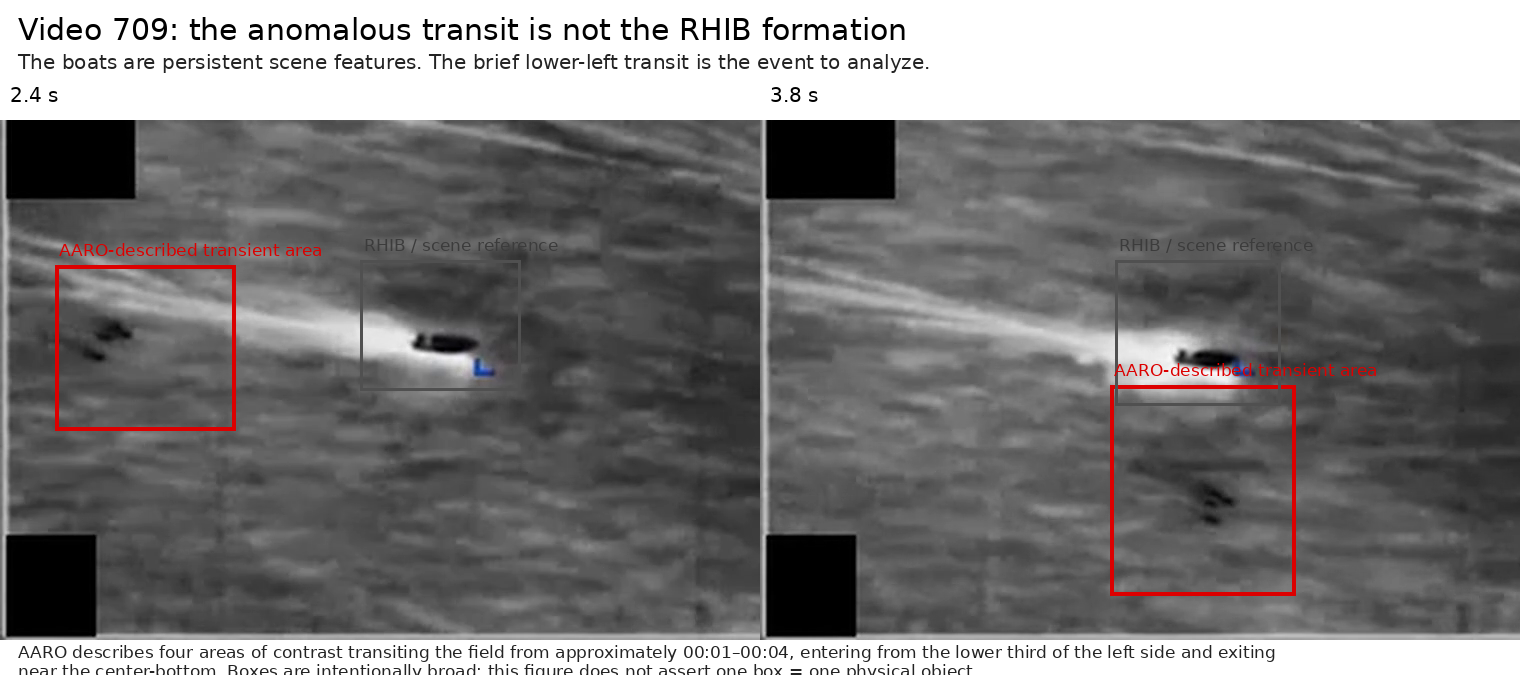
The Geometry of the Unknown: A Collective-Motion Approach to UAP
A corrected collective-motion analysis of UAP imagery: formation measurements from Videos 718 and 782, with Video 709 treated as a brief transient pending dedicated tracking.
Read more
Nuclear Energy and Metric Propulsion: Testing a Speculative Coupling
A conceptual examination of the missing physics behind a hypothetical nuclear-to-field coupling, with explicit assumptions, equations, and test requirements.
Read more
Connections and Emergence: Mathematics Behind Networked Systems
How weighted connections, optimization, and feedback help explain collective behavior in neural networks and inform questions about cyber defense.
Read more