Cyber warfare, political coercion and the vulnerability of American democracy
What if the objective of an attack against American critical infrastructure was not to destroy it, but to demonstrate how easily it could be taken away?
Over the course of six days in November, Americans experienced disruptions to commercial aviation, banking and digital communications. Even the classified communications infrastructure of the National Security Agency experienced an outage.
On November 13, the Federal Aviation Administration issued a nationwide ground stop. Communications instability affected 17 of the country’s 22 Air Route Traffic Control Centers. Approximately 12,462 flights were canceled that Friday alone.
The disruptions occurred against an extraordinary geopolitical backdrop. On November 3, American voters returned control of both chambers of Congress to the Democratic Party, delivering a significant electoral rebuke to the Trump administration. On November 19, President Donald Trump is scheduled to meet with Russian President Vladimir Putin and Chinese President Xi Jinping in China.
On November 18, senior American national security officials testified before Congress that their investigations had found no evidence of a coordinated foreign cyberattack. Available technical explanations support their assessment.
But irrespective of what caused these disruptions, the events offer an instructive demonstration of an increasingly important national security vulnerability.
What would it look like if a foreign adversary deliberately sought to produce these effects?
What if the intended audience was the American national security establishment, the civilian population and, ultimately, the American electorate itself?
The demonstration of force
Throughout the history of warfare, nations have sought to demonstrate their military capabilities without committing themselves to the consequences of conventional war.
Military exercises, missile tests, nuclear weapons demonstrations and the deployment of naval forces have all served variations of this purpose. Their strategic value lies not necessarily in their immediate destructive capacity, but in their ability to influence the decisions of those observing them.
Cyberspace offers another means of achieving this objective.
Unlike a naval flotilla assembled off the coast of an adversary, however, a cyber capability can remain embedded within the infrastructure of the country it is intended to threaten. Its existence may remain undiscovered for years.
A foreign power capable of disrupting American transportation, energy, communications or financial infrastructure could theoretically demonstrate its reach without firing a missile or crossing a territorial boundary.
It could also do so without publicly claiming responsibility.
For the national security establishment, knowledge that an adversary possesses such capabilities could influence military planning, diplomatic negotiations and assessments of the domestic consequences of escalation.
The strategic message would be relatively simple: your ability to project power abroad does not insulate you from consequences at home.
The adversary is already inside
The possibility that foreign governments have positioned themselves to conduct such operations is not merely theoretical.
In February 2024, American and allied cybersecurity agencies disclosed that a Chinese state-sponsored cyber group known as Volt Typhoon had compromised multiple American critical infrastructure organizations, including those operating in the communications, energy, transportation and water sectors.
American intelligence and cybersecurity agencies assessed with high confidence that the activity was intended to establish access that could facilitate disruptive or destructive operations during a future crisis or conflict.
This represented a distinctly different strategic objective from traditional intelligence collection. The value of the compromised infrastructure lay in the possibility of disrupting it when geopolitical circumstances warranted.
Iran has demonstrated a willingness to exploit similar vulnerabilities.
In 2026, American authorities issued and subsequently expanded warnings concerning Iranian-affiliated cyber actors targeting industrial control equipment across American critical infrastructure. The affected sectors included water, energy and local government services.
Russia has an established history of destructive cyber operations and foreign political influence campaigns. North Korea has developed significant offensive cyber capabilities, particularly in support of intelligence collection, financial theft and regime financing.
These governments have different strategic interests and operational approaches. Their capabilities should not be mistaken for evidence that they are acting in concert.
Nevertheless, the United States faces an environment in which multiple foreign powers possess both the means and potential incentives to impose domestic costs through cyberspace.
The civilian population as a second front
The strategic significance of critical infrastructure extends far beyond its importance to military readiness.
It is the foundation upon which modern civilian life depends.
An interruption to the electrical grid can affect access to food, water and medical services. A disruption to financial networks can inhibit commerce and access to personal savings. A failure of transportation infrastructure can strand families, interrupt supply chains and impose substantial economic losses.
For most Americans, the consequences of a geopolitical confrontation are experienced indirectly through news coverage, government statements or changes in the price of goods.
Critical infrastructure disruption can fundamentally alter that relationship.
It brings the consequences of geopolitical conflict into the home, the workplace and the daily lives of ordinary citizens.
Under such circumstances, the economic damage may represent only a portion of the strategic value of an attack. The psychological and political consequences could be more enduring.
Repeated disruptions could undermine confidence in public institutions, diminish perceptions of government competence and increase pressure on elected officials to avoid confrontation with foreign powers.
An adversary need not destroy a society to influence its behavior. It may only need to convince that society that exercising its political independence carries an unacceptable cost.
Post-electoral coercion
Much of the contemporary discussion surrounding foreign interference in democratic elections focuses on attempts to influence how citizens vote.
But what happens when citizens have already voted?
What happens when the outcome of a democratic election is unfavorable to the strategic interests of a foreign government?
In September 2024, the United States Department of Justice announced the disruption of a Russian government-directed foreign influence campaign known as Doppelganger. Later that month, federal prosecutors indicted three alleged Iranian Revolutionary Guard cyber actors in connection with an operation intended to influence the American presidential election.
These cases established important precedents for understanding foreign interference in American democratic processes.
However, election interference is generally understood as an activity directed toward shaping an electoral outcome. Less consideration has been given to the possibility that foreign powers could seek to influence the consequences of an election after its outcome has been determined.
We propose examining this threat through a framework we call post-electoral coercion.
Post-electoral coercion is the deliberate application of external pressure following a democratic election, intended to punish, intimidate or constrain a population or its representatives for exercising political self-determination.
Such a strategy would not necessarily seek to overturn an election. It could instead seek to diminish the ability of newly elected representatives to exercise their authority, weaken public support for their policies or discourage similar electoral choices in the future.
The interval between an election and the transfer of legislative or executive authority may be particularly relevant to this threat model.
Foreign governments that benefit from weakened democratic institutions, diminished American participation in international alliances or reduced resistance to authoritarian expansion may have an interest in constraining a political movement that threatens those objectives.
The 2026 midterm elections invite consideration of these possibilities. They do not, by themselves, establish that any foreign government has acted upon them.
A convergence of interests
Russia, China, Iran and North Korea need not share a unified operational command or a formal strategic agreement to pursue objectives that collectively place pressure on the United States.
Russia has an interest in weakening Western alliances and diminishing American support for Ukrainian sovereignty.
China has an interest in constraining American military intervention in the Indo-Pacific and strengthening its geopolitical bargaining position.
Iran has an interest in deterring American military action and demonstrating its capacity to retaliate asymmetrically against a conventionally superior adversary.
North Korea has an interest in regime preservation, undermining international pressure and expanding its capacity to finance strategic programs.
These interests are distinct. In certain circumstances, however, they may converge around a common objective: reducing America’s freedom of action.
Such a convergence does not require coordination. Independent actions undertaken in pursuit of separate national interests could produce cumulative effects on American society and its national security establishment.
This possibility warrants consideration in how the United States evaluates its exposure to simultaneous geopolitical crises.
The danger of misattribution
There is an equally important vulnerability inherent in this analysis.
A society convinced that every significant infrastructure failure is the work of a foreign government may become susceptible to precisely the psychological effects an adversary seeks to produce.
A software defect, an engineering failure or an improperly executed maintenance operation can generate consequences similar to those of a deliberate cyberattack.
The recent November disruptions illustrate this problem.
The FAA identified a telecommunications failure as the precipitating cause of its nationwide ground stop. Other affected organizations reported technical defects. On November 18, American intelligence officials reaffirmed their assessment that the incidents were not part of a coordinated foreign attack.
The available evidence favors non-adversarial explanations for these events.
We should not confuse the existence of hostile capabilities with evidence that those capabilities have been employed. Nor should temporal proximity to an election or geopolitical summit be mistaken for evidence of causation.
However, the absence of a deliberate attack does not diminish the strategic significance of the consequences we have observed.
If ordinary technical failures can produce disruption at this scale, what might a capable adversary accomplish during a period of geopolitical confrontation?
And how effectively could American institutions distinguish between the two?
Democratic resilience as national security doctrine
Protecting critical infrastructure has traditionally been approached as a problem of engineering, cybersecurity, regulatory oversight and economic continuity.
It should also be understood as a problem of democratic resilience.
The ability of Americans to exercise their political rights without fear of external punishment is inseparable from national sovereignty.
Recognizing this requires a broader approach to homeland security. Infrastructure operators must develop greater operational resilience. Federal and state governments must improve their capacity to correlate disruptions across sectors, distinguish technical failures from hostile activity and communicate findings transparently to the public.
Congress must maintain the expertise and institutional capacity necessary to independently evaluate emerging threats and oversee the government’s response.
The American public, meanwhile, must be equipped to distinguish credible national security warnings from efforts to manipulate public perception through fear.
Resilience serves a strategic purpose beyond the restoration of individual systems. It reduces the potential returns an adversary can expect from attempting to coerce American society.
The next frontier of hybrid warfare
The United States has spent much of its modern history developing the ability to deter foreign military aggression.
The next frontier of deterrence may require us to consider how foreign powers could attempt to constrain the exercise of American democracy without initiating a conventional war.
The November infrastructure disruptions do not establish that such a campaign is underway.
They do, however, provide an illustration of the societal effects through which one might operate.
Understanding those effects, and developing the capacity to withstand them, should become an increasingly important component of American national security doctrine.
Because ultimately, the objective of defending American critical infrastructure is not simply to keep the lights on.
It is to preserve the ability of a free people to determine their own future.
HybridSec examines the intersection of technology, geopolitical risk and national security. This article introduces post-electoral coercion as a proposed analytical framework, rather than an attribution of the November 2026 infrastructure disruptions.
Share this article

yankee0one
Former documentary junky turned pilot, turned sailor, turned cyborg
Related Articles
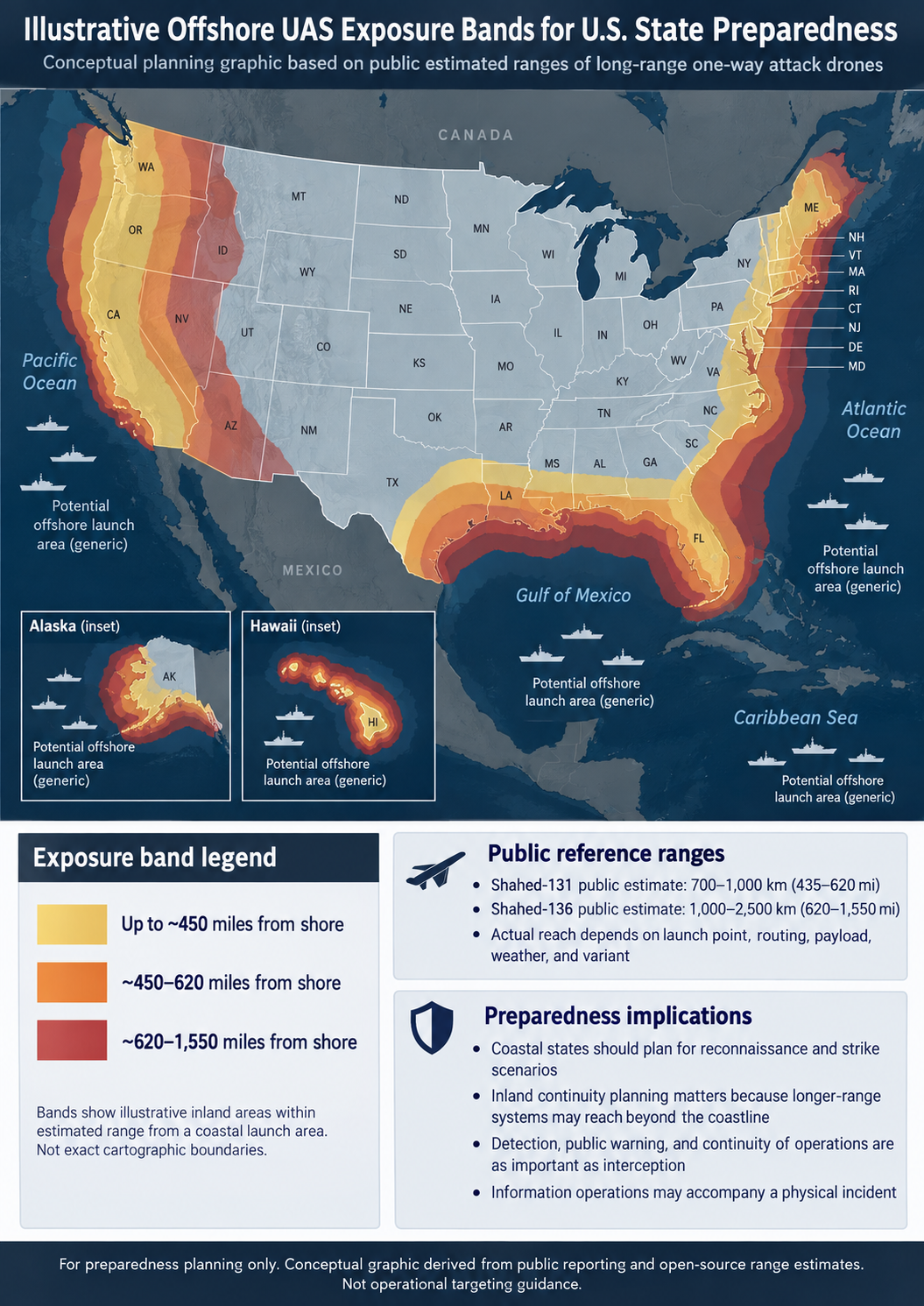
The Quiet Side of the Front: Extra Vigilance Required in the United States for the Upcoming Midterm Elections
Long-range one-way attack drones have changed the geography of homeland defense. The United States should use the weeks before the 2026 midterm elections to think through the threat before an incident forces us to.
Read more
25 Years Later: Reflections from a GWOT Combat Veteran
On the 25th anniversary of September 11, a GWOT combat veteran reflects on service, sacrifice, solidarity, and our shared responsibilities as free people.
Read more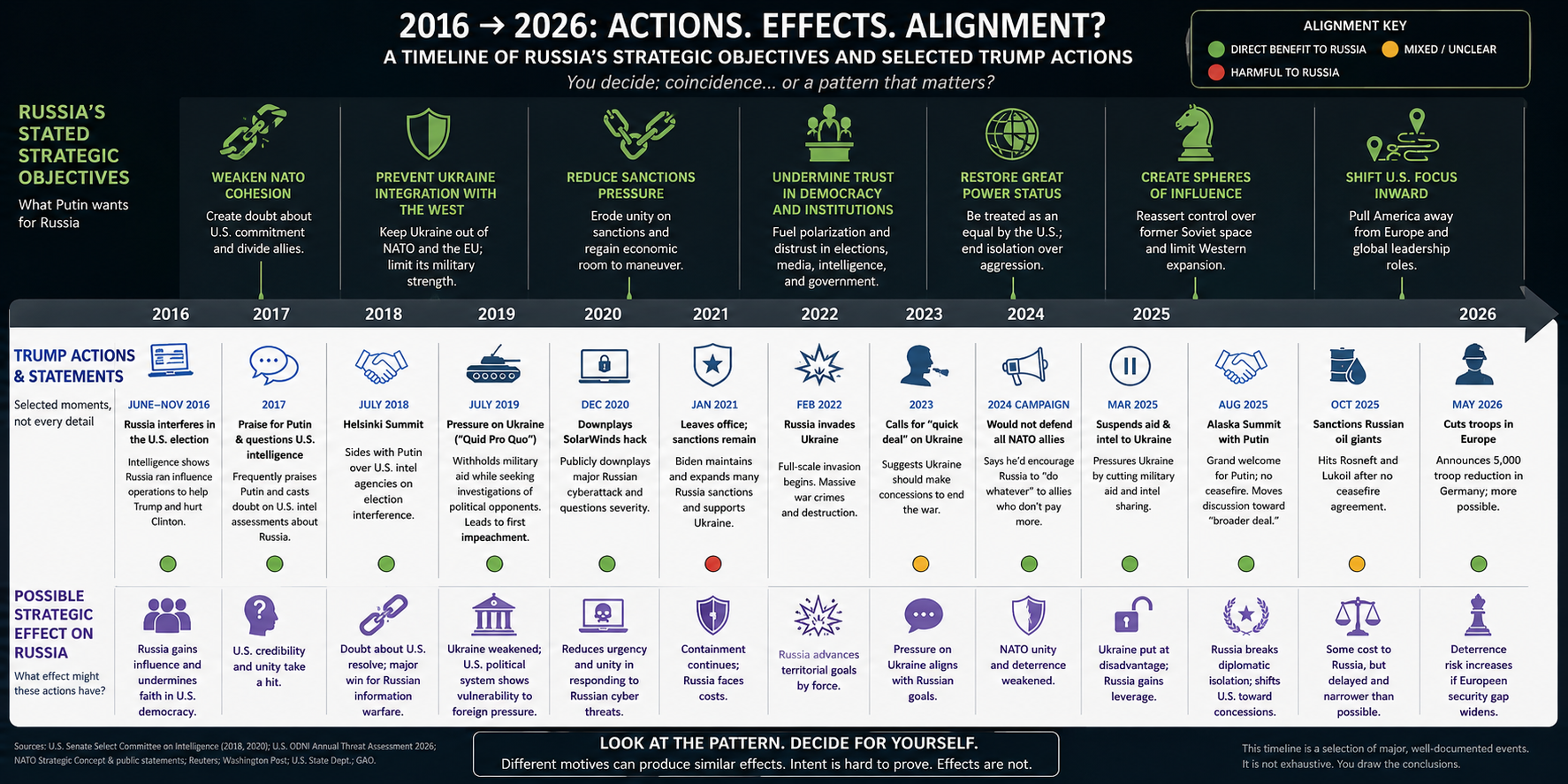
U.S. Decisions and Russian Objectives: Assessing Strategic Effects
An assessment of selected U.S. decisions, their documented effects, and where those effects align with Russian objectives, with counterexamples and limits.
Read more