An Open Letter to the Free World
To my fellow citizens, at home and around the world:
Twenty-five years ago, we watched people go to work, board airplanes, and begin ordinary days that would end in unimaginable violence. Families were changed forever. Those of us who remember September 11 carry some part of that day with us still.
In the aftermath, our allies stood with us. NATO invoked Article 5 for the first time in its history, recognizing the attacks on the United States as an attack on all its members. That commitment expressed something we should remember today: our security was connected, and we had a responsibility to one another. NATO’s account of Article 5
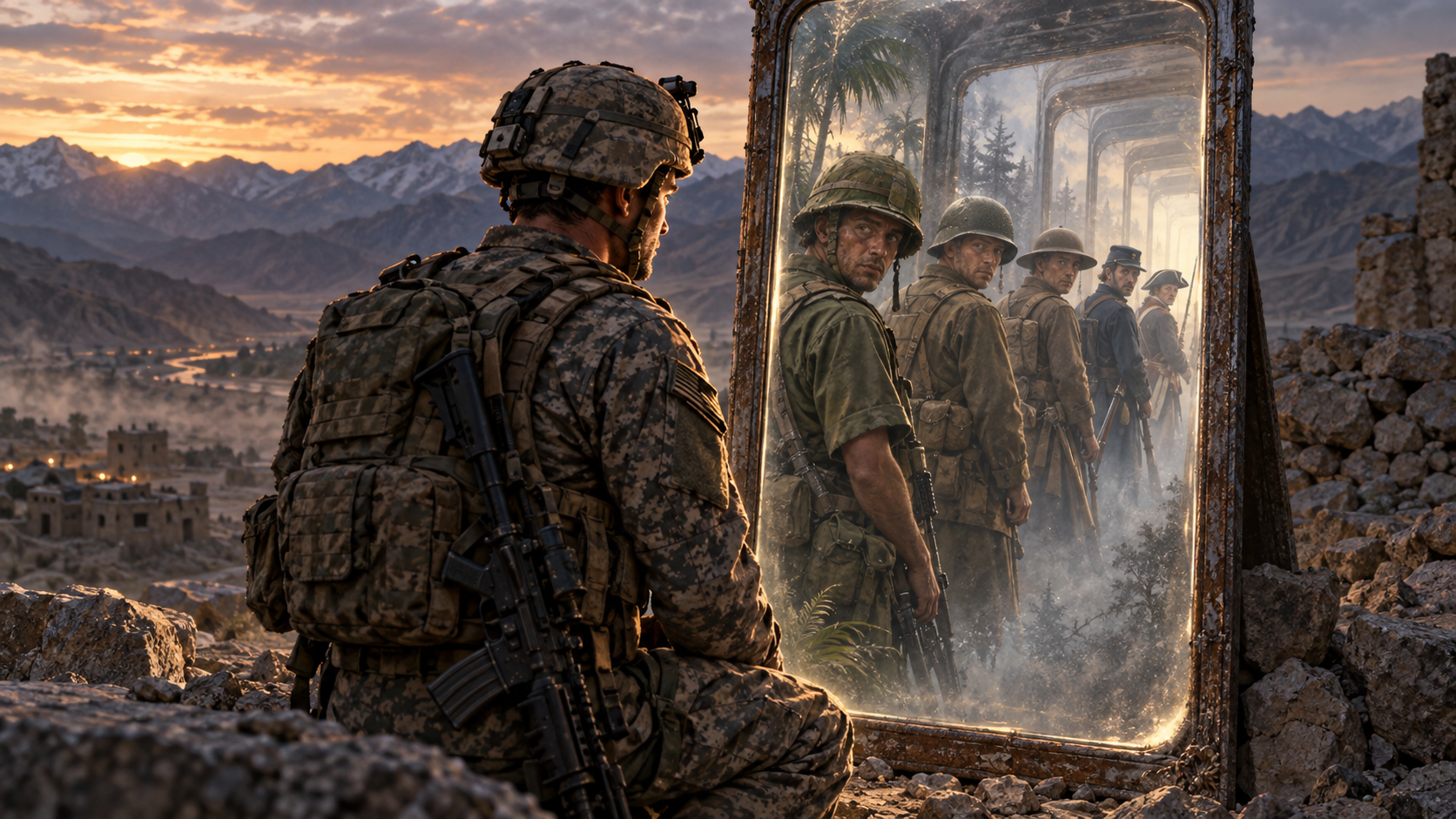
A generation went to war. Idealists, protectors, dreamers, warriors. Mothers and fathers, sons and daughters, brothers and sisters. People who believed they had a duty to protect others from an enemy willing to murder civilians in pursuit of its objectives.
I was one of those who served.
For nearly twenty years in Afghanistan, the machinery of war ground on. Deployments, patrols, raids, surveillance, and airstrikes became a sustained effort measured in rotations and years. Night after night, people went out on missions. Families waited for calls. Another group prepared to take the place of those coming home.
Over time, the distance between that war and everyday life at home seemed to grow. For much of the public, it became something happening elsewhere. For the people living it, there was no such distance.
Looking back requires honesty. We owe that to those who served, to the families who lost someone, and to the civilians who suffered through those wars. The decisions made in our names deserve scrutiny. The human cost deserves remembrance beyond an anniversary.
For me, service was grounded in a belief that other people’s lives mattered and that protecting them was worth personal sacrifice. I believed in a United States whose commitment to individual rights, liberty, and justice carried responsibilities toward our neighbors around the world.
Twenty-five years later, I find myself asking what those responsibilities require of us now.
We can ask a military to defend a country. Sustaining a free society also requires the daily participation of its citizens. It requires people willing to tell the truth, challenge abuses of power, accept responsibility, and recognize the dignity of someone whose life or opinions differ from their own.
That work belongs to all of us.
What concerns me about this moment is how many pressures can reinforce one another. Economic insecurity can make people vulnerable to those offering someone to blame. Falsehoods can turn that fear into hostility. Political leaders can exploit the hostility, while corruption deepens the belief that participation is pointless. War and rapid technological change add uncertainty to lives already under strain.
The danger grows when exhaustion becomes withdrawal. We stop following what is happening. We decide everyone is corrupt, every source is dishonest, and nothing we do will matter. We leave public life to whoever is willing to take control of it.
I understand why people feel overwhelmed. There are families to raise, bills to pay, businesses to keep alive, and private struggles that nobody else sees. I include myself in this. Citizenship asks something of us even when our own lives are difficult, and we have to find ways to make that responsibility manageable enough to practice.
George Washington warned about the relationship between internal division and outside influence in his 1796 Farewell Address. Describing the dangers of excessive partisanship, he wrote:
“It opens the door to foreign influence and corruption, which finds a facilitated access to the government itself through the channels of party passions.”
He also warned that cycles of factional revenge could lead people to seek relief in the absolute power of an individual. Washington’s Farewell Address
I read that as a warning about what happens when defeating one another becomes more important than preserving our ability to govern ourselves. Washington was addressing Americans in the circumstances of his time. The vulnerability he described should concern free people everywhere.
Our differences require debate. Injustice requires opposition. Unity has to allow for both. We need a shared commitment to each other’s rights, to accountable government, and to settling our disagreements without intimidation or political violence.
That commitment becomes meaningful in ordinary decisions.
Learn enough about an issue to speak responsibly. Check a claim before passing it along. Vote, attend a local meeting, volunteer, or support reporting that helps your community understand what is being done in its name. Demand honesty from the leaders you support. Speak up when someone is threatened or stripped of their dignity, including when doing so makes things uncomfortable among your own friends.
Make an effort with your neighbors. Have the conversation you have been avoiding. Listen long enough to understand what someone is worried about. Work together on something useful. Trust needs opportunities to develop through experience.
And look beyond your own borders. The rights we value should inform how we regard people elsewhere who want to live without fear, speak freely, and have a say in their future. The solidarity we received after September 11 carries an obligation to remember that others need solidarity too.
We must fight for what is right through the freedoms and institutions we have a duty to sustain. That means organizing, speaking, voting, serving, and persisting when the work is slow or unpopular. It means holding to our principles when abandoning them would benefit our side.
A determined minority can do enormous damage when enough people withdraw. Its success is never a reason to treat surrender as inevitable. Every person who participates adds to the community’s ability to resist abuse and solve its problems.
On this anniversary, I want us to remember the people we lost and the lives changed by everything that followed. I also want us to consider what we owe the living and the generations who will inherit the consequences of our choices.
We once felt a responsibility to people we had never met. We can practice that responsibility again, beginning with the people around us.
We must remain united as a free people. Each of us has a part in making that possible.
-Post 9/11 GWOT Combat Veteran