
A trait that helps an organism in one environment may become a disadvantage when conditions change. A small simulation gives us a way to explore that relationship by making the rules explicit and watching what follows.
The original HybridSec experiment describes red squares, blue circles, and green triangles competing across generations. Each group encounters limited resources, changing environmental conditions, and random trait variation. These are simplified model assumptions, rather than universal rules of life.
Define fitness within the model
Here, fitness means how closely a group’s traits match the resource conditions represented by the simulation. When the resource target moves, the same trait can receive a different score.
That is useful for illustrating selection, but “the best adapted will always win” is too strong. Random events, initial conditions, and the details of reproduction can affect which individuals survive. Biological fitness also concerns reproductive success; it is not a general ranking of strength or worth.
A business adapting to a changing market offers a limited analogy. It can clarify the importance of context, but a model of simulated organisms cannot establish how a company should behave or predict which organization will succeed.
Explain competition and variation
The model limits resources so that individuals cannot all obtain what they need. Competition can occur within a group as well as between groups. Small differences in traits may then influence survival and reproduction.
Mutation introduces random changes. It supplies variation; it does not anticipate what the environment will require. Selection acts on the resulting differences under the conditions specified by the model.
Competition is only one relationship that real systems exhibit. Cooperation, chance, and constraints also matter. The simulation’s inclusion of one mechanism should not be mistaken for proof that all adaptation requires competition.
Change the environment deliberately
The described model shifts environmental and resource variables at a fixed rate. This lets us ask how the pace of change affects the groups.
A slowly moving target may allow a population to track the resource conditions. A rapid shift may leave many individuals poorly matched. Those are hypotheses to test across runs, rather than conclusions established by the model’s description.
Stability also has value. In security operations, maintained procedures and dependable infrastructure can support adaptation by making the baseline understandable. An analogy with evolution should help ask a question, not become a slogan against planning.
Record the experiment
The original description tracks average fitness, survivors by group, and final mean traits. To reproduce the work, a reader would also need the source code, initial populations, mutation distribution, resource function, selection rules, number of generations, and random seed.
Those materials were not included with the article. The table below preserves its reported values without treating them as independently reproduced results.
| Group | Reported mean trait | Reported survivors |
|---|---|---|
| Red | 0.34 | 24 |
| Blue | 0.51 | 28 |
| Green | 0.66 | 27 |
One table cannot establish a general advantage for any group. The result may change with another seed or a different rate of environmental drift. Without the full configuration, the trait values also lack enough context to explain why those survivors remained.
Turn the illustration into a test
Run the same conditions with several random seeds and compare variation across outcomes. Then change one assumption, such as resource abundance or environmental drift, while holding the others constant.
Include a stable environment as a comparison. Report extinctions as well as surviving populations, and make the code and configuration available so another person can inspect the process.
What interests me about this model is the connection between simple rules and outcomes that are difficult to predict by inspection. The next step is to make the experiment reproducible and determine which patterns persist when its assumptions change.
Share this article

yankee0one
Decade of experience watching PBS Space Time on youtube.
Related Articles
The Geometry of the Unknown: A Collective-Motion Approach to UAP
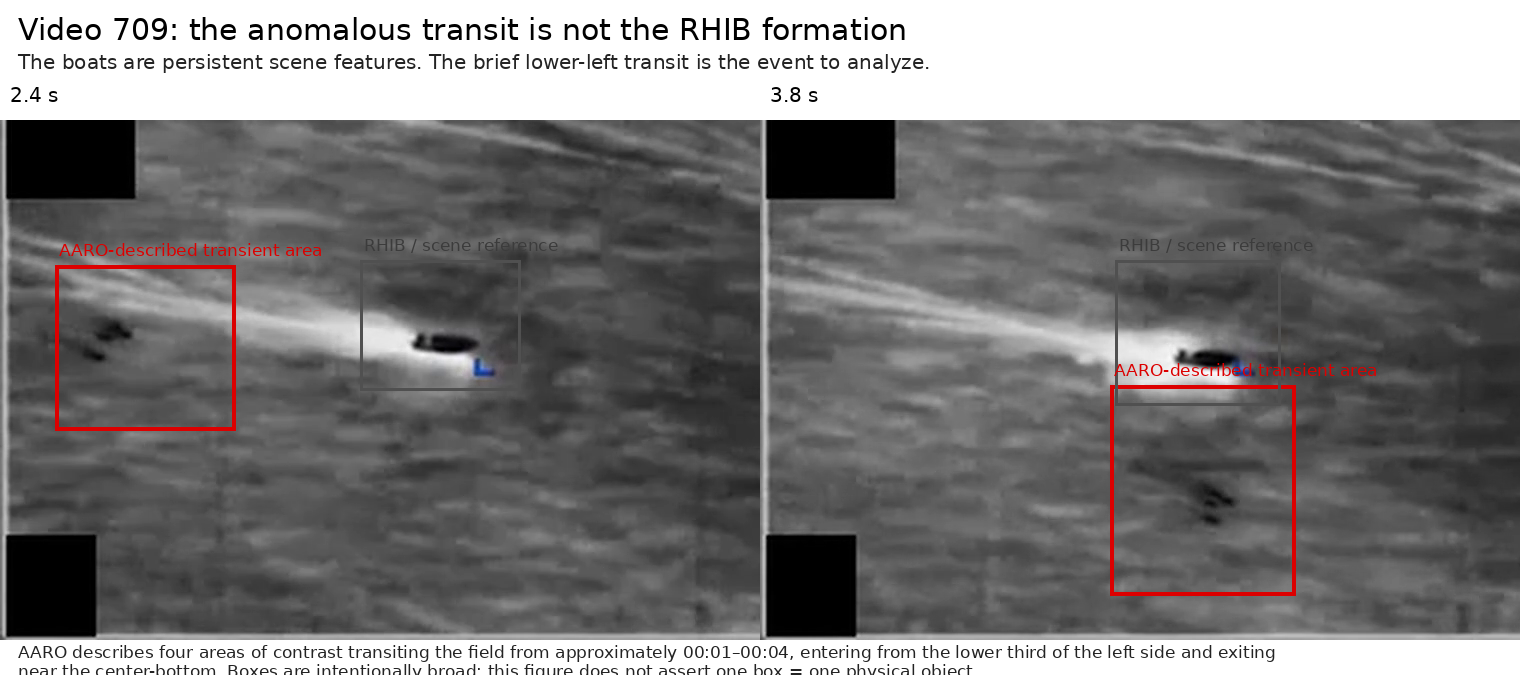
A corrected collective-motion analysis of UAP imagery: formation measurements from Videos 718 and 782, with Video 709 treated as a brief transient pending dedicated tracking.
Read more
Nuclear Energy and Metric Propulsion: Testing a Speculative Coupling
A conceptual examination of the missing physics behind a hypothetical nuclear-to-field coupling, with explicit assumptions, equations, and test requirements.
Read more
Connections and Emergence: Mathematics Behind Networked Systems
How weighted connections, optimization, and feedback help explain collective behavior in neural networks and inform questions about cyber defense.
Read more