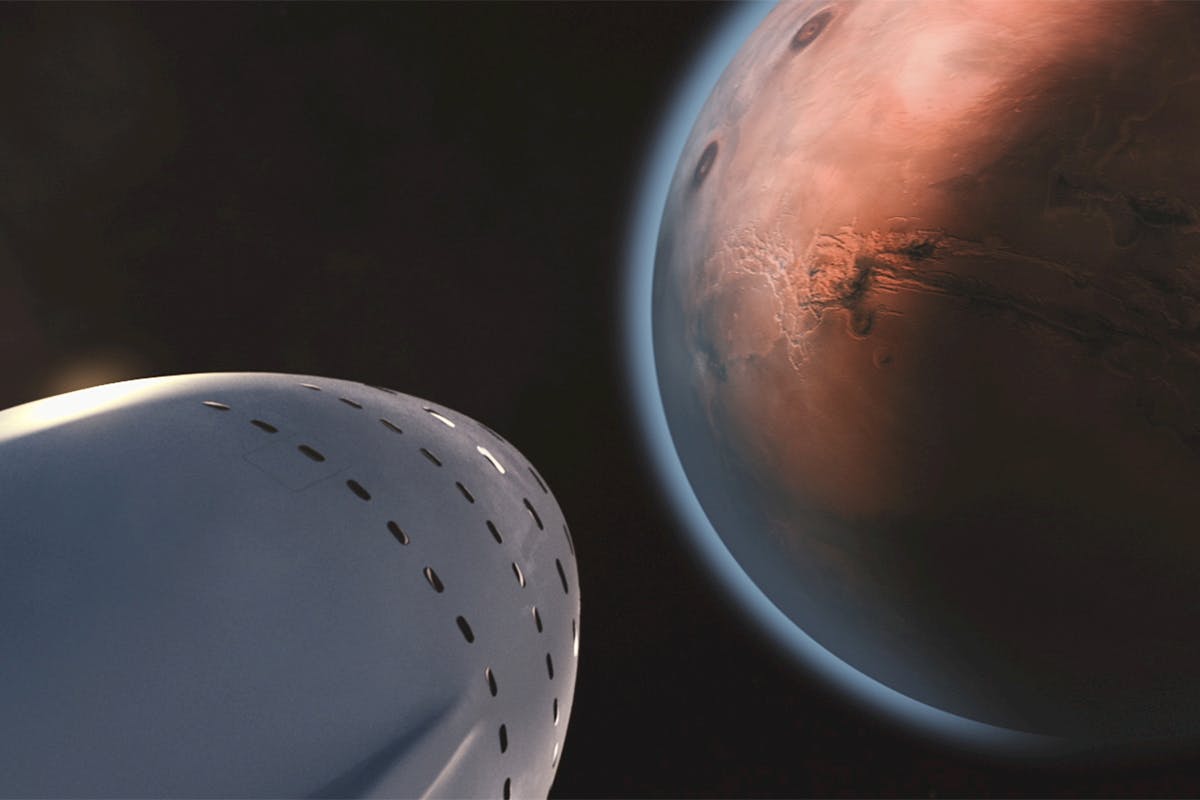
An oxygen-production experiment on Mars answers a specific question: can a device extract oxygen from the local atmosphere under Martian conditions? It does not answer whether a crew can depend on a much larger system throughout a mission.
That distinction is a useful starting point for looking at Mars exploration in 2025. Progress comes from resolving dependencies, then showing that the resulting systems work together.
Connect demonstrations to mission needs
NASA’s MOXIE experiment completed its operations in 2023 after demonstrating oxygen extraction from the Martian atmosphere. The result supports further work on local resource use.
A human mission would need to scale production, supply power, handle maintenance, and store what it produces. Those requirements make the experiment valuable without turning it into a complete life-support or propellant system.
Robotic missions also contribute environmental measurements and geological observations. Each reduces some uncertainty while leaving questions that another instrument or mission must address.
Examine the sequence of a mission
A crewed architecture would need cargo delivery, a safe landing, verified surface equipment, and a way to return. The crew’s schedule depends on that sequence.
A transport system may need capabilities such as orbital refueling or repeated launches, depending on the design. Those capabilities require demonstrations of their own. Proposed landing dates should be read alongside the readiness of the supporting systems.
NASA’s Moon to Mars architecture approach is useful because it connects exploration objectives with the elements needed to achieve them. It should not be read as a guarantee of a particular human Mars arrival date.
Evaluate international and commercial contributions
Government agencies, researchers, and companies can contribute different parts of the work. A launch vehicle, communications service, instrument, or habitat concept has to fit the mission’s interfaces and operating requirements.
Track what is funded, what is being tested, and what has been demonstrated. An ambitious proposal can define a direction without establishing that the system is ready.
Follow the unanswered questions
For a 2025 planning perspective, useful questions include how a mission will sustain power, repair critical equipment, protect the crew, and confirm a return capability before departure from Earth.
Those are engineering problems worth following in their own right. A successful test brings a human mission closer by resolving a specific uncertainty. Understanding which uncertainty was resolved tells us more than a countdown.
Share this article

yankee0one
Who doesn't love the next frontier, the great unknown.
Related Articles
3I/ATLAS: An Evidence Log of the 2025 Observations
A historical log of Swift, JWST, SPHEREx, VLT, Keck, and solar-monitoring observations, separating measurements, model-dependent estimates, and unresolved reports.
Read moreWorking with Vera C. Rubin Observatory Data
How Rubin observations become images, catalogs, and alerts, and how to choose an access route and investigate a candidate variable source.
Read more
Illustrating UFO Witness Reports with Generative AI
A method for turning reported observations into labeled illustrations while preserving the distinction between testimony, interpretation, and evidence.
Read more