Quantum computing progress becomes useful when researchers can show what a system calculated, how reliably it did so, and what resources the result required. A larger processor is part of that story, but it is not the whole measure.
For a May 2025 perspective, error correction provides a concrete development to examine. Application claims in chemistry, logistics, and security should be assessed separately.
Examine a demonstrated result
Google Quantum AI and collaborators reported quantum error correction below the surface-code threshold. The work appeared online in December 2024 and in Nature’s 2025 volume. Under the tested conditions, increasing the code size reduced logical error rates.
A logical qubit encodes information using multiple physical qubits. The significance is that adding the resources needed for correction can improve reliability when physical errors are sufficiently controlled.
This does not establish that a machine can run any useful algorithm for as long as needed. Logical operations, scale, control, and the requirements of the application remain part of the engineering problem.
Ask what an application claim measures
Chemistry is a motivating area because molecular systems are quantum mechanical. A proposed calculation still needs an accuracy target and a comparison with classical methods, including the cost of preparing inputs and reading results.
A logistics demonstration may combine quantum and classical processing. To evaluate it, identify the contribution of each part and compare against appropriate classical optimization methods. A pilot alone does not demonstrate a production advantage.
The same discipline applies to pharmaceutical claims. A calculation involving a molecule is not a clinical outcome, and it cannot establish a reduction in drug-development time without evidence from that larger process.
Separate quantum computing from quantum-safe cryptography
A security team can have work to do before a cryptographically relevant quantum computer exists. In August 2024, NIST finalized its first post-quantum cryptography standards, covering a key-encapsulation mechanism and digital signatures.
These algorithms run on conventional systems. Their purpose is to address anticipated attacks from future quantum computers; adopting them does not require buying a quantum processor.
For an organization, preparation begins with knowing where cryptography is used, which information needs long-lived confidentiality, and which products or protocols will require migration. Follow the applicable standards and vendor implementation guidance as the work proceeds.
Keep the evaluation specific
When reading a quantum announcement, identify the task, error model, hardware resources, classical baseline, and reproducibility materials. Ask whether the result is a laboratory demonstration, a pilot, or a measured operational benefit.
The progress is worth following because the experiments expose what remains to be solved. Error correction offers one measurable step. Practical utility will require similarly clear evidence for the applications built on it.
Share this article

yankee0one
Decade of experience watching PBS Space Time on youtube.
Related Articles
The Geometry of the Unknown: A Collective-Motion Approach to UAP
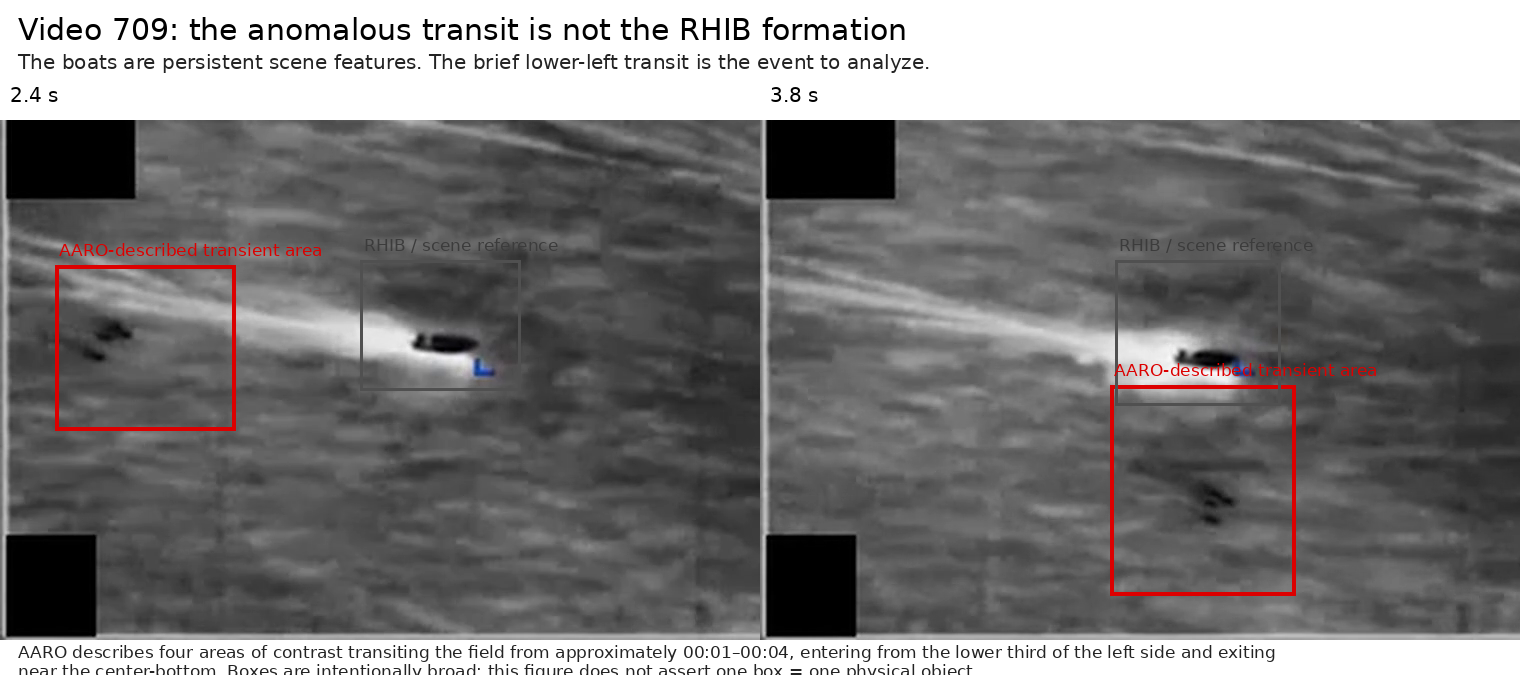
A corrected collective-motion analysis of UAP imagery: formation measurements from Videos 718 and 782, with Video 709 treated as a brief transient pending dedicated tracking.
Read more
Nuclear Energy and Metric Propulsion: Testing a Speculative Coupling
A conceptual examination of the missing physics behind a hypothetical nuclear-to-field coupling, with explicit assumptions, equations, and test requirements.
Read more
Connections and Emergence: Mathematics Behind Networked Systems
How weighted connections, optimization, and feedback help explain collective behavior in neural networks and inform questions about cyber defense.
Read more